Rosters for healthcare professionals in the Netherlands
A fair roster, automatic and explainableRostering software for healthcare
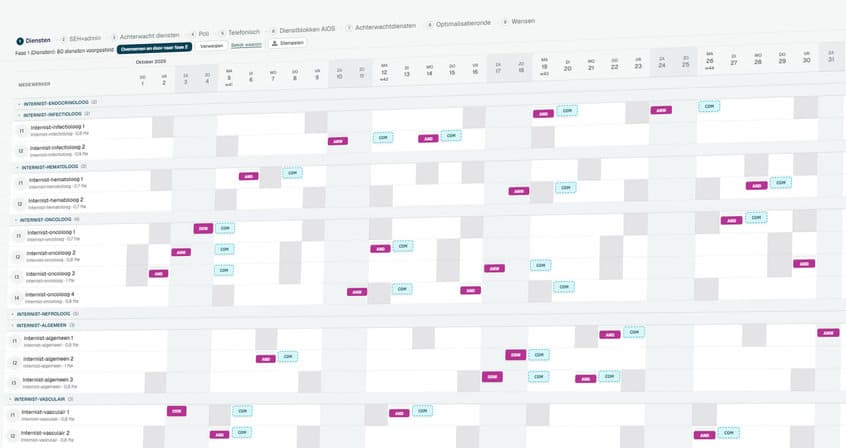
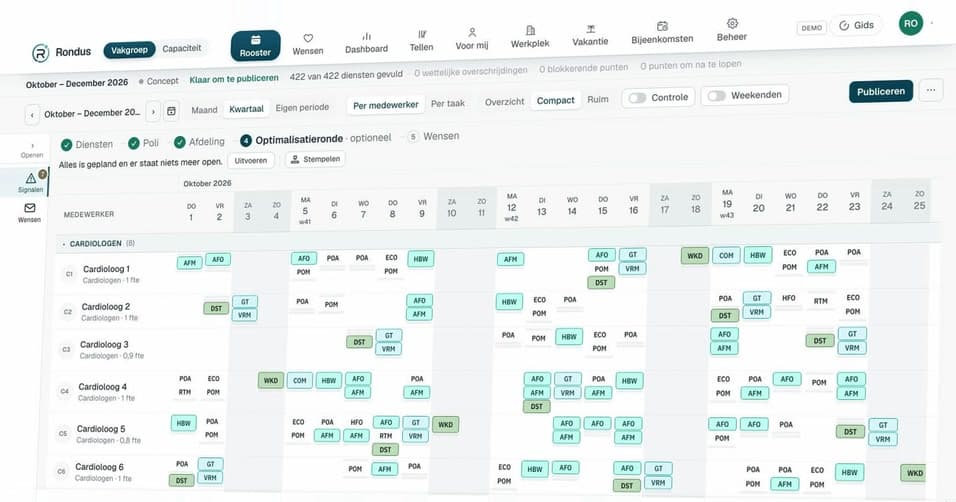
Distribution after this phase
ExampleThe norm is the share by dienst-fte; a deviation of about one shift is normal
| Colleague | FTE | Worked | Norm | Deviation |
|---|---|---|---|---|
| Cardiologist 1 | 1 | 9 | 8.9 | +0.1 |
| Cardiologist 3 | 0.9 | 8 | 8 | 0 |
| Resident 1 | 1 | 9 | 8.9 | +0.1 |
422 of 422 shifts filled · 0 legal violationsExample
Chapters
The Capacity module is in development and is coming soon
Does this sound familiar?
What schedulers tell us most often:
The duty roster in one Excel file, clinic planning in another, leave in someone's inbox. Nobody knows which version is the latest.
Rest after a night shift, part-time, training requirements for residents, clinics and duties that must not overlap. The old system cannot handle it, so the scheduler checks everything by hand.
Every month the same argument about who worked too many shifts
Seven modules,one plan
For the scheduler
Roster and auto-planner
For the capacity manager
Capacity module
In development
For every staff member
Request inventory
For the scheduler
Workplace planning
For the whole group
Leave module
For every staff member
Calendar module
For the training supervisor
Training schedule
In development
From annual budgetto roster
Annual budget
cardiology · adopted Dec 2026
Revenue agreement
€12.4m
Production
14,200 consultations
Staffing
41.5 FTE
Waiting time standard
max. 6 weeks
Budget split
- Outpatient 46%
- Theatre and procedures 28%
- Shifts 26%
Demand for care
cardiology · 2027
| New patients | 4,980 |
|---|---|
| Follow-up consultations | 7,640 |
| By telephone | 1,580 |
| Total consultations | 14,200 |
| Referrals a week | 96 |
| Current waiting time | 6.4 weeks |
Waiting time above the 6-week standard
Clinic grid
weekly blueprint
| Mon | Tue | Wed | Thu | Fri | |
|---|---|---|---|---|---|
| morning | P | P | TS | P | OK |
| afternoon | OK | P | P | TS | P |
Clinics a week
38
Sessions filled
10 of 10
New : follow-up
1 : 1.5
Suggestion: 3 extra clinics a week keeps the waiting time under 6 weeks
Staff deployment
available in FTE
- Cardiologist 11.0
- Cardiologist 20.8
- Cardiologist 30.9
- Resident 11.0
- Cardiologist 40.6
- ANIOS 10.8
Roster
week 14 · 2027
| Mon | Tue | Wed | Thu | Fri | |
|---|---|---|---|---|---|
| Cardiologist 1 | P | OK | D | A | P |
| Cardiologist 2 | OK | P | D | P | |
| Cardiologist 3 | D | N | N | OK | |
| Resident 1 | A | P | P | OK | D |
| ANIOS 1 | N | P | D | A |
Shifts 2027
5,475
Clinic coverage
38 of 38
Annual budget
Demand for care
Clinic grid
Staff deployment
Roster
Your rules, not ours
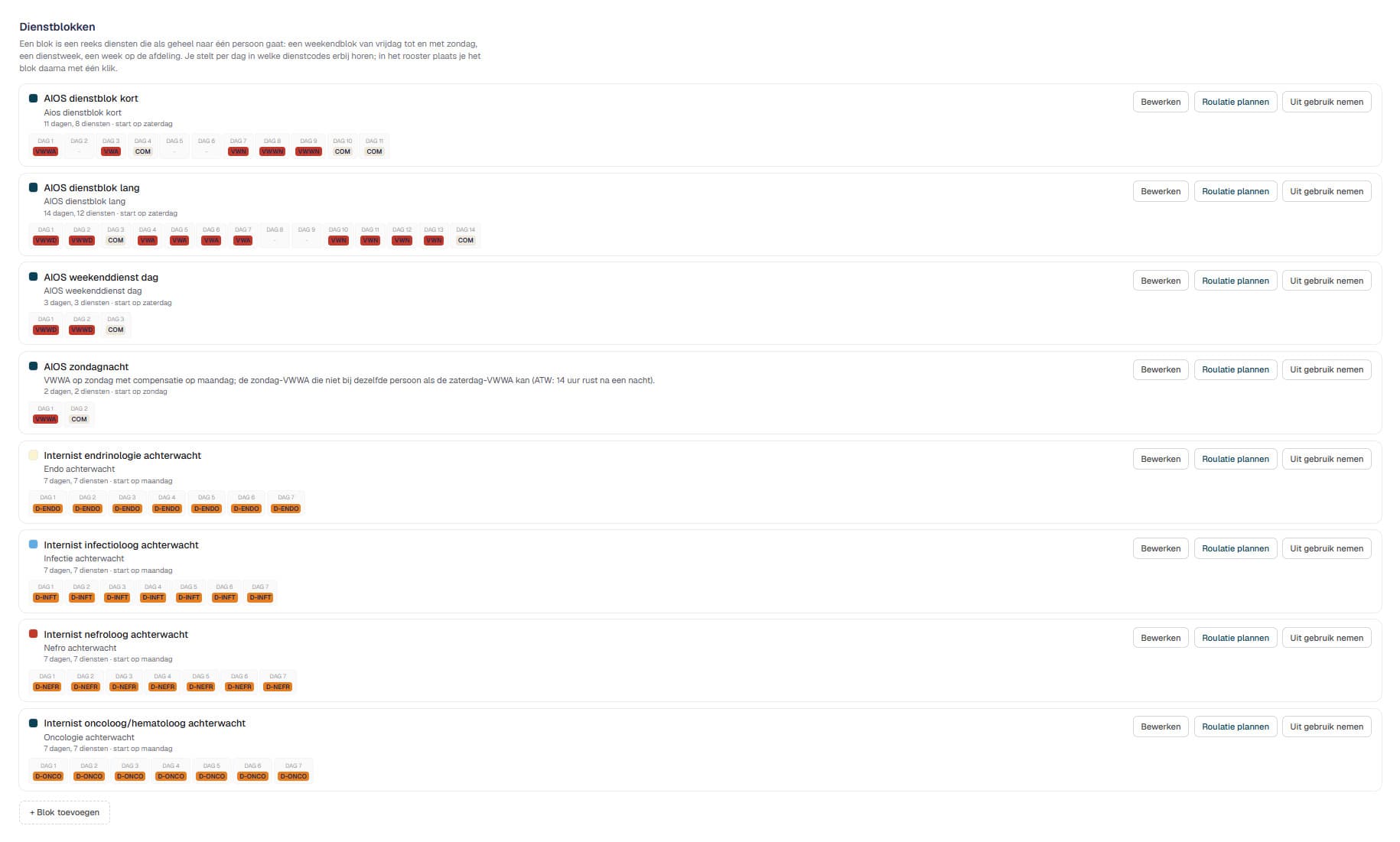
Every shift is a code you set yourself. Rondus works with your rostering group's agreements, within the legal limits.
- Shift codes with times, staffing and who may work them
- Shift blocks that go to one person as a whole
- The law as the floor; a collective agreement profile (cao) or own profile can be stricter, never looser
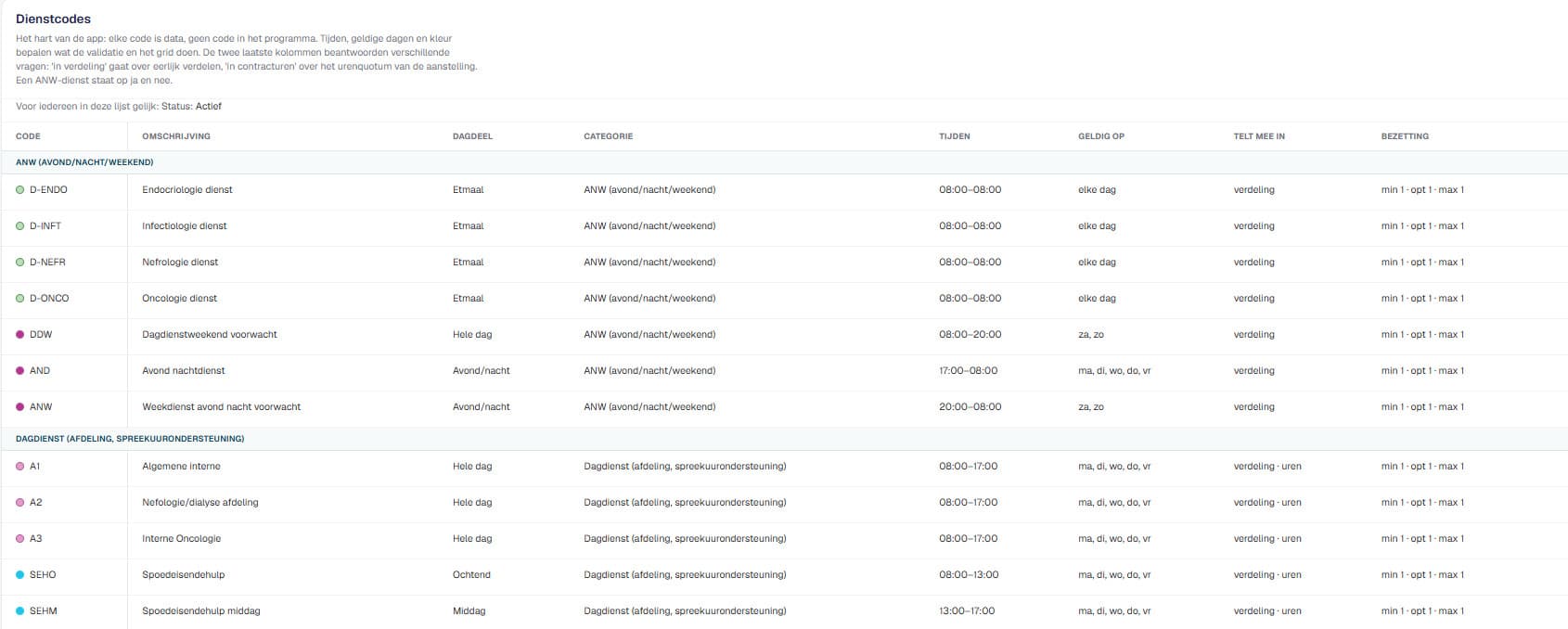
14 hours rest after a night
Who it is for
Rondus is for everyone who works with rosters in daily practice, simple or complex
- hospitals (medical specialists, residents, doctors not in training, physician assistants and nurse practitioners)
- general practices
- mental health institutions
- nursing and home care organisations
- physiotherapy practices
- pharmacies
- veterinary practices
You set up the rules from your collective agreement (cao) as a profile and link it to your roster
 Sander FidderCo-founder
 Robert-Jan de LaatCo-founder
Built by a paediatrician and an IT specialist About Rondus